French Hotel Interiors and Luxury Stays: Designing the Perfect Accommodation Experience in Paris, Nice, Lyon and Marseille
The Architecture of an Exceptional French Hotel Stay
A remarkable hotel experience begins long before a guest places a suitcase beside the bed. It starts with the relationship between the building, the destination, the room, the surrounding neighborhood and the expectations of the traveler. France provides an unusually broad range of accommodation styles, making the hotel itself an important part of the journey rather than merely a practical place to spend the night.
Travelers comparing Hotels & Resorts in France can encounter historic buildings, contemporary city properties, intimate boutique accommodations, spacious suites and carefully designed resorts. Each category offers a different way of experiencing its destination, and the most successful choice is usually the one that supports the traveler's daily routine.
The concept of luxury has also changed. Modern travelers increasingly look beyond decorative details and consider comfort, functionality, privacy, lighting, sound control, technology, room proportions and location. A beautiful interior can make an immediate impression, but practical details determine how enjoyable the room becomes after several hours or several days.
French hospitality is particularly interesting because accommodation often reflects local identity. Parisian properties may incorporate classic architectural details and sophisticated urban design. Nice hotels can emphasize Mediterranean light and relaxed coastal colors. Lyon accommodation can combine historic architecture with modern interiors, while Marseille properties may draw inspiration from the colors and textures of the Mediterranean.
This creates an opportunity for travelers to make the hotel part of the destination experience. Rather than choosing a generic room that could exist anywhere, guests can select accommodation that complements the character of the city they are visiting.
A strong accommodation choice should answer three questions: Does the location support the itinerary? Does the room support the traveler's comfort? And do the hotel's facilities provide genuine value for the way the property will actually be used?
The distinction is especially important when comparing several properties within the same destination. Two hotels may appear similar in photographs while offering very different room layouts, transportation access and everyday convenience.
For that reason, experienced travelers often compare the complete experience rather than focusing on one headline feature. A slightly smaller room in an excellent location may be more useful for an active city trip, while a larger suite farther from the center may suit a slower vacation where guests intend to spend significant time inside the property.
Hotel Specifications, Functions, Advantages and Features
| Hotel Specification | Primary Function | Main Advantages | Important Features | Suitable Travel Style |
|---|---|---|---|---|
| Central City Hotel | Provides a practical base for sightseeing, shopping and business activities. | Reduces daily transportation time and makes spontaneous exploration easier. | Central location, transport access, Wi-Fi, reception services and comfortable rooms. | City breaks and business travel. |
| Boutique Hotel | Creates a distinctive and personalized accommodation atmosphere. | Strong visual identity and a more intimate environment. | Unique interiors, carefully selected furniture, local design references and personalized details. | Couples, design-focused travelers and short luxury escapes. |
| Luxury Suite | Provides additional space for relaxation, work and longer stays. | Greater privacy and separation between sleeping and living areas. | Larger floor area, seating zone, premium bathroom and enhanced room layout. | Extended stays and special occasions. |
| Coastal Hotel | Combines accommodation with access to seaside surroundings. | Relaxed atmosphere and opportunities to enjoy natural light and views. | Balconies, terraces, large windows, outdoor seating and coastal positioning. | Leisure holidays and Mediterranean trips. |
| Business Hotel | Supports efficient work and professional travel. | Convenient transportation and work-friendly facilities. | Desk, ergonomic chair, high-speed connectivity, charging points and flexible check-in. | Corporate travel and conferences. |
| Family-Oriented Property | Provides practical accommodation for multiple travelers. | More flexible room configurations and useful services. | Family rooms, additional sleeping options, storage and convenient facilities. | Family vacations and longer stays. |
The specification table demonstrates why hotel selection should be based on function rather than appearance alone. A property can be visually impressive yet unsuitable for a particular itinerary if its location creates unnecessary commuting or its standard rooms lack the features a traveler requires.
For guests staying one or two nights, convenience may dominate the decision. For longer stays, room dimensions, storage and seating become increasingly important. Travelers working remotely may need a genuine desk, while families may require additional sleeping capacity and floor space.
The idea of value should therefore be connected to usage. An extensive list of amenities is not automatically valuable if guests never use them. Conversely, a simple feature such as excellent sound insulation or a convenient bedside charging point can become extremely valuable when it improves every night of a trip.
Paris Hotel Rooms: Combining Heritage With Modern Comfort
A Hotel in Paris can offer one of the most recognizable accommodation experiences in Europe. The city contains historic buildings, contemporary properties and boutique hotels where interior design becomes a major part of the guest experience.
Classic Parisian architecture can provide tall windows, decorative moldings, traditional flooring and elegant proportions. Contemporary interiors may instead use clean lines, neutral colors and minimalist furniture. The two approaches can also be combined, producing rooms that preserve the identity of the building while providing the convenience expected by modern travelers.
One of the most important considerations is room scale. Paris buildings frequently have distinctive architectural layouts, meaning room shapes can vary considerably. A room with excellent vertical proportions and large windows can feel spacious even when its floor area is moderate.
Lighting has an equally important role. Natural daylight can emphasize architectural details and make the room feel more open. In the evening, layered lighting can create a softer atmosphere while allowing the room to function for reading, planning the next day's itinerary or working.

The guest room should also support the rhythm of sightseeing. After several hours of walking through museums, streets and landmarks, travelers benefit from a comfortable bed, accessible lighting, suitable climate control and a bathroom that is easy to use.
Storage is another feature that is often underestimated. A traveler arriving with several outfits, coats, shoes and personal belongings can quickly find a room less convenient if there is nowhere to organize luggage. Well-planned wardrobes, drawers and luggage areas can make a substantial difference.
Another consideration is sound. Central Paris neighborhoods can be active throughout the day, so guests who value quiet should pay attention to room orientation, window construction and sound insulation. An interior-facing room can offer a different atmosphere from a room overlooking a busy street.
Technology should remain useful rather than intrusive. Modern rooms may provide multiple charging points, smart televisions, wireless connectivity and adjustable lighting. These features are most effective when they are intuitive and positioned where guests naturally need them.
For travelers planning excursions outside the capital, accommodation decisions can also connect with transportation planning. Comparing Car rentals in Paris may be relevant when the itinerary extends beyond the city and requires independent transportation.
Creating a Premium Paris Room Experience
Premium hotel design is rarely dependent on one expensive element. Instead, it comes from the interaction of multiple details. Bedding, lighting, furniture proportions, curtains, flooring, artwork and bathroom materials can create a coherent atmosphere when they are carefully coordinated.
In Paris, restrained elegance often works particularly well. A neutral foundation can be combined with one or two distinctive materials, such as natural wood, stone, brushed metal or textured fabric. This approach creates sophistication without making the room visually overwhelming.
Furniture placement should preserve circulation. Guests should be able to move comfortably between the bed, bathroom, wardrobe and entrance without navigating around unnecessary objects. A well-positioned chair can create a reading area, while a compact desk can support professional tasks without taking over the room.
Window treatments also influence the experience. Floor-to-ceiling curtains can add softness while controlling daylight. Blackout layers are especially useful for travelers adjusting to a new schedule or recovering from long journeys.
Elegant Lighting
Use multiple light sources rather than relying on one overhead fixture. Bedside lamps, indirect illumination and task lighting can create a more adaptable room.
Quality Bedding
The bed should become the visual and functional center of the room, with appropriate mattress support, pillows and breathable linens.
Practical Storage
Well-organized wardrobes and luggage spaces allow guests to keep the room visually calm throughout the stay.
Balanced Materials
Wood, fabric, stone and metal can be combined to create depth while preserving a sophisticated visual language.
These principles are useful when comparing a hotel photograph with the written room description. A visually beautiful image becomes more meaningful when the room also provides the practical features required for the trip.
Nice Hotel Design: Mediterranean Light and Relaxed Elegance
A Hotel in Nice offers a distinctly different visual environment from the French capital. Mediterranean light, coastal colors and outdoor spaces can influence the way hotels approach interior design.
Natural light can become one of the most important features of a Nice room. Large windows can connect the interior with the surrounding landscape, while balconies and terraces can provide additional space for quiet moments throughout the day.
The most effective coastal interiors do not need to be excessively themed. Soft neutrals, natural wood, subtle blue or green accents and tactile textiles can suggest the Mediterranean without turning the room into a decorative concept.

Room orientation can be important in coastal accommodation. A sea-facing room may provide a memorable visual experience, while a courtyard-facing room can offer greater privacy or a quieter environment. Travelers should compare the actual room description instead of assuming that every category provides the same outlook.
Nice is also an attractive base for regional travel. Guests may use the city as a starting point for exploring surrounding destinations, making transportation planning part of the accommodation decision.
For travelers considering independent transportation, Car rentals in Nice can be evaluated alongside the hotel's location, parking arrangements and the number of regional journeys included in the itinerary.
A room with a comfortable seating area can be particularly useful in Nice because the destination can encourage a slower daily rhythm. Instead of treating the room purely as a sleeping space, travelers may use it as a place to read, organize plans or enjoy quiet time between outings.
Bathrooms also contribute strongly to the feeling of a coastal hotel. Light-colored surfaces, good ventilation, generous mirrors and natural-looking materials can create an environment that feels fresh and calm.
Climate control should be considered carefully. A bright room with large windows can become warm during certain periods, making effective temperature control and good curtains important for daytime comfort and nighttime sleep.
How to Select a Nice Hotel Room for a Longer Stay
A short visit can make a compact room perfectly practical, but a longer stay changes the calculation. Travelers staying several nights should pay closer attention to storage, seating, bathroom space and the ability to keep belongings organized.
A larger room can provide a separate place for luggage, a comfortable chair and additional circulation space. These improvements may seem minor on the first day but can become highly noticeable after a week.
Outdoor space can also influence the experience. A private terrace or balcony can effectively expand the usable area of the room, particularly when the weather encourages guests to spend time outside.
Travelers should also examine whether the room has a proper work surface if remote work is part of the itinerary. A small decorative table may not provide sufficient space for a laptop and accessories, whereas a dedicated desk can support several hours of comfortable work.
When staying more than a few nights, compare storage, seating, room dimensions and bathroom layout with the same attention given to the bed. These features influence daily comfort throughout the entire reservation.
The surrounding neighborhood matters as well. A room can be excellent, but if reaching the places on the itinerary requires complicated transfers several times a day, the overall experience may become less efficient.
Hotels in Lyon: Where Historic Character Meets Contemporary Comfort
Hotels in Lyon offer an appealing combination of historic architecture, modern accommodation and a strong urban identity. The city allows travelers to experience a hotel environment that can feel different from both Paris and the Mediterranean coast.
Historic Lyon buildings can provide distinctive architectural details, while contemporary hotel rooms can introduce modern furniture, efficient lighting and current technology. This contrast creates an interesting visual language that works particularly well when the historic structure is respected rather than hidden.
Business travelers can benefit from properties that provide practical work areas and transportation connections. A good desk, reliable internet and comfortable seating can transform a hotel room into a temporary professional environment.
Leisure travelers may place more emphasis on neighborhood atmosphere. A centrally located hotel can make it easier to explore streets, cultural attractions and local areas on foot.
Room dimensions should be considered carefully. Lyon accommodation can include everything from compact urban rooms to larger suites, so travelers should compare actual floor space rather than relying only on labels such as standard, superior or deluxe.
Architectural character can also influence the room experience. Exposed structural details, tall windows, original surfaces or carefully preserved elements can provide a sense of authenticity that cannot be replicated by generic decoration.
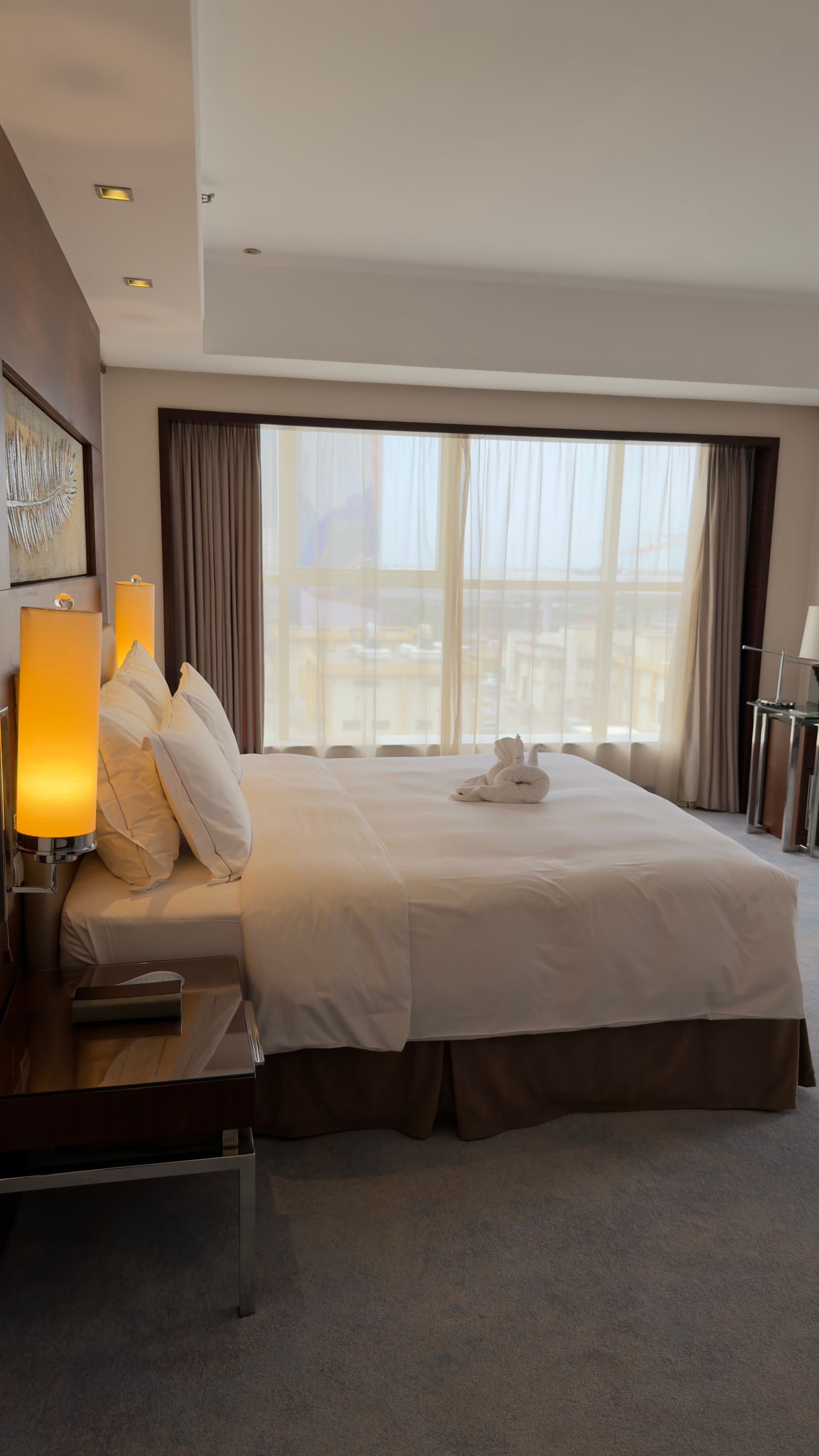
The visual relationship between the bed, windows and workspace is especially important. A room can feel considerably more spacious when furniture is positioned to preserve open circulation and maintain clear visual pathways.
For longer stays, travelers may also appreciate a seating area separate from the bed. This distinction allows guests to relax, read or work without treating the sleeping area as the only usable part of the room.
Lyon's position as an urban destination also makes transportation planning relevant. Some travelers can rely primarily on public transportation and walking, while others may use the city as a base for regional excursions.
Business-Friendly Hotel Rooms in Lyon
Business travel places unique demands on hotel rooms. The guest may need to answer emails, join online meetings, prepare documents and organize schedules without leaving the room.
A proper desk is therefore more than a decorative feature. Its height, width, lighting and proximity to electrical outlets can determine whether a traveler can work comfortably.
Internet connectivity is equally important. Modern professional travel depends on reliable communication, cloud services and digital planning, so connectivity should be treated as a core hotel feature rather than a luxury.
Noise control can have an even greater impact during professional travel. A quiet room supports concentration during the day and better sleep at night, allowing travelers to maintain productivity throughout the trip.
Dedicated Workspace
A stable desk and comfortable chair provide a practical environment for professional tasks.
Connectivity
Reliable internet and accessible charging points simplify modern business travel.
Efficient Location
Convenient transportation reduces the time required to reach meetings and appointments.
Restful Bedroom
A comfortable sleeping environment helps balance demanding work schedules with recovery time.
Business travelers should also consider breakfast timing, reception availability and luggage storage. These practical services can reduce friction during a short professional visit.
Hotels in Marseille: Mediterranean Character With Urban Convenience
Hotels in Marseille can provide an accommodation style strongly influenced by the Mediterranean environment. Natural light, coastal colors, clean lines and relaxed materials can create rooms that feel fresh and comfortable.
Marseille also has a distinctive urban character, which means travelers should consider location carefully. Some visitors may prioritize access to waterfront areas, while others may prefer historic neighborhoods or transportation connections.
Room views can make a major difference. A property overlooking the surrounding city or waterfront can create a stronger connection with the destination, while an interior-facing room may provide a more private and quiet atmosphere.
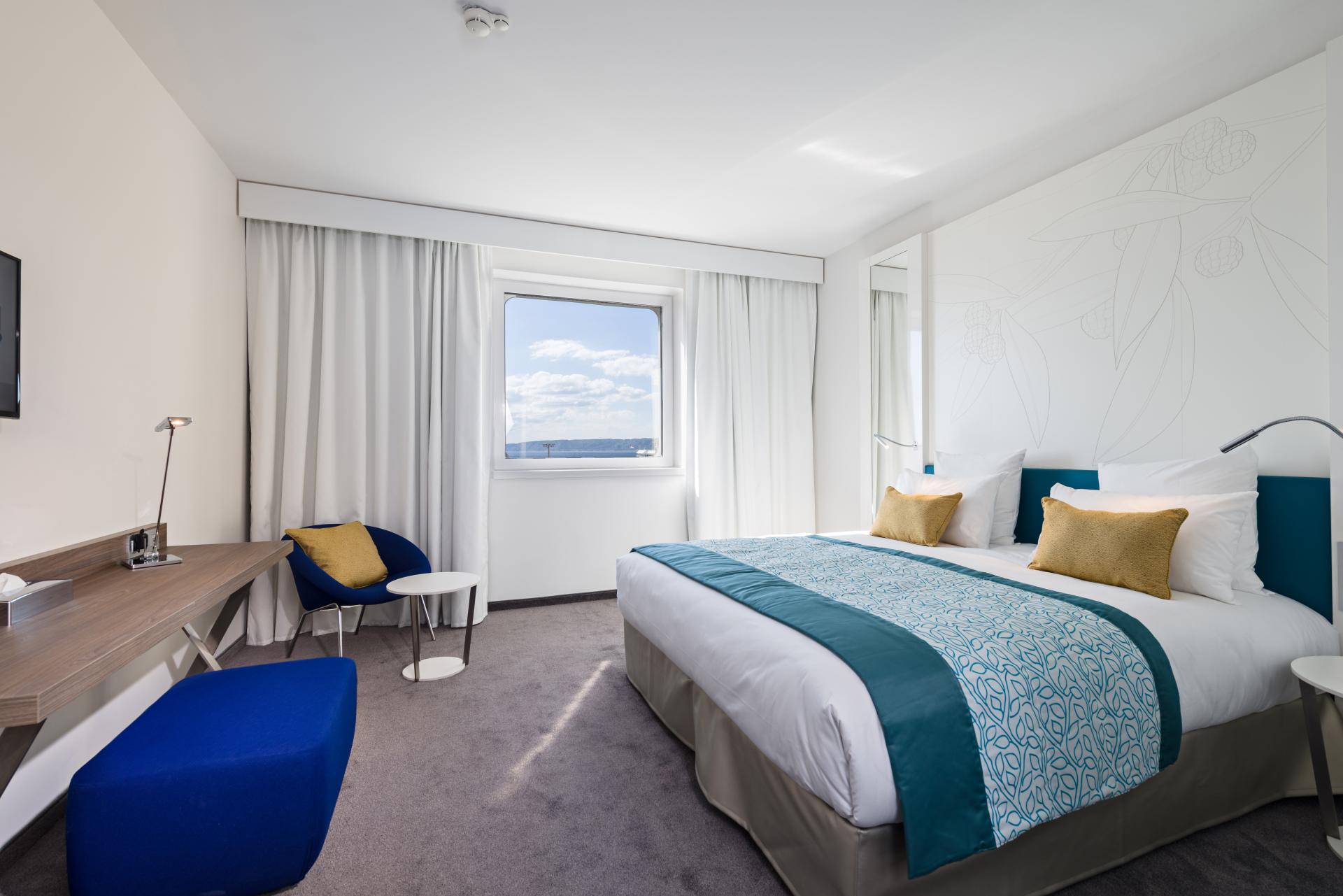
Color can be especially effective in Marseille accommodation. Blue, sand, cream, white and muted natural shades can create a visual connection with the Mediterranean without becoming excessive.
Furniture should remain functional. A small seating area can provide an alternative to the bed, while a well-positioned desk can support planning, reading or professional work.
Bathrooms benefit from the same approach. Clean surfaces, adequate lighting and organized storage create an environment that feels practical and refined.
Guests planning regional exploration may also consider transportation. A rental vehicle can provide flexibility when the itinerary includes destinations outside the city, but travelers should compare parking arrangements and daily driving requirements before choosing accommodation.
In many cases, the hotel should be selected first according to the places the traveler wants to visit, followed by a transportation decision that supports the itinerary rather than complicating it.
Marseille Hotel Rooms for Different Travel Styles
Couples may appreciate rooms with attractive lighting, comfortable seating and a strong visual identity. Families may require more floor space and flexible sleeping arrangements. Business travelers may prioritize a workspace and reliable connectivity.
Long-stay guests should look for practical storage and comfortable seating, while travelers visiting for a short city break may focus more heavily on location.
These differences illustrate why hotel marketing categories cannot replace individual evaluation. A property designed around business travelers may not provide the same atmosphere desired for a relaxed weekend, while a boutique property focused on design may have smaller rooms.
The most effective approach is to identify the trip's priorities before comparing properties. Once those priorities are established, room descriptions become easier to evaluate.

Interior design becomes particularly valuable when the hotel itself is part of the travel experience. A distinctive room can become a memorable part of the trip while still providing the practical comfort required after a full day of exploration.
Understanding Hotel Room Categories
Hotel room names can sometimes be confusing because different properties use different terminology. Standard, superior, deluxe, executive, premium and suite categories do not have universal definitions. Travelers should therefore examine the actual specifications of each category.
Room size is one of the most useful comparison points. The difference between two categories may be only a few square meters, but that additional space can provide a separate seating area or better luggage storage.
Views can also create significant differences. A city view, courtyard view, garden view or sea view can change the character of the room even when the floor area is similar.
Bathroom configuration should also be examined. Some upgraded rooms provide larger bathrooms, separate showers, bathtubs or additional storage.
Travelers should avoid assuming that a more expensive category automatically provides every desired feature. Instead, compare the specific amenities listed for each room.
This is particularly useful when booking through different platforms, where photographs can vary. The room description should remain the primary reference for understanding what is included.
The Role of Natural Light in Hotel Design
Natural light can dramatically influence the perception of a hotel room. A bright room often appears more spacious, while large windows can create a visual relationship between the accommodation and its surroundings.
In Paris, natural light can highlight traditional architecture and urban views. In Nice, it can emphasize the Mediterranean environment. In Lyon, it can enhance historic structural elements, while in Marseille it can complement coastal-inspired interiors.
Window size alone is not enough. The direction of the room, surrounding buildings, curtains and glazing all affect the actual lighting conditions.
Travelers who value morning light may prefer certain orientations, while guests who sleep during the day may prioritize excellent blackout curtains.
The best hotel rooms use natural and artificial light together. Daylight creates openness during the day, while layered lamps and indirect lighting can produce a calmer atmosphere after sunset.
Lighting also influences photography. A room may look particularly attractive in professionally photographed daylight, yet its nighttime appearance can be very different. Travelers should therefore consider the actual lighting fixtures and not only the photographs.
Furniture Planning for Comfortable Hotel Rooms
Furniture should support the guest's routine. The bed provides the primary sleeping function, but other elements determine whether the room is comfortable for longer periods.
A chair near a window can create a natural reading space. A small table can provide a place for personal belongings. A desk can support work or itinerary planning. A bench at the foot of the bed can provide seating while also helping define the room's visual structure.
Furniture scale matters. Oversized pieces can make a room feel crowded, while furniture that is too small can make the room appear unfinished.
Hotels with carefully planned furniture often feel more spacious because each object has a defined purpose. This principle is especially valuable in city hotels where room dimensions may be limited.
Travelers should also consider luggage placement. A suitcase left open on the floor can interfere with circulation, so a luggage bench or designated storage area is a surprisingly useful feature.
The ideal room creates a natural sequence from entrance to wardrobe, bathroom, sleeping area and seating area. When these elements work together, guests can settle into the room quickly without constantly rearranging belongings.
Bathrooms as an Essential Part of Hotel Quality
The bathroom can strongly influence the overall perception of accommodation. Guests use it several times each day, making its design and functionality particularly important.
A well-designed bathroom should have sufficient lighting, practical storage and an efficient layout. The position of the sink, shower, toilet and towel storage should allow easy movement without unnecessary obstacles.
Materials also affect the visual impression. Stone, ceramic, glass, wood-effect finishes and brushed metals can create different atmospheres. The most successful combinations maintain visual consistency with the bedroom.
Large mirrors can increase the perception of space, while good task lighting makes everyday routines easier. Ventilation is another important practical factor, particularly in compact rooms.
Travelers comparing upgraded room categories should check whether the additional cost provides a meaningfully larger or better-equipped bathroom. In some properties, the bathroom upgrade may be one of the most noticeable differences between categories.
Transportation and Hotel Location Should Be Planned Together
Accommodation does not exist separately from transportation. The location of a hotel affects how much time travelers spend moving around the destination and how easily they can adapt their itinerary.
For a city-focused Paris trip, travelers may rely heavily on walking and public transportation. For a broader journey, however, driving can become useful when destinations outside the urban center are included.
Travelers considering Car rentals in France should calculate the complete journey rather than focusing only on the rental price. Parking, fuel, collection points and return locations can all influence the practical value of a vehicle.
A car can provide flexibility, but flexibility has a different value for every itinerary. A traveler staying entirely in central Paris may have little reason to drive, while someone visiting several regional destinations may benefit significantly from independent transportation.
The same principle applies to Nice. A traveler spending most days within the city may not require a car, while someone planning multiple regional excursions may consider a rental vehicle more useful.
Hotel location should therefore be evaluated according to the complete itinerary rather than in isolation.
Planning Arrival Through Paris Charles de Gaulle Airport
For international travelers beginning their French journey in Paris, arrival planning can influence the hotel experience from the first day.
Comparing Flights to Paris Charles de Gaulle Airport (CDG) alongside accommodation allows travelers to consider arrival time, check-in schedules and transportation requirements as one connected plan.
An early arrival may make luggage storage particularly useful. A late arrival may make simple transportation access more important. Travelers should consider these practical details before selecting a property.
Arrival day can also be physically demanding, especially after a long international flight. A comfortable hotel room with an easy check-in process can make the first evening considerably more manageable.
The same planning principle applies to departure. If the return flight leaves early, transportation from the hotel to the airport should be considered before finalizing the accommodation.
How Hotel Design Influences the Perception of Luxury
Luxury is often communicated through details rather than obvious decoration. The quality of materials, consistency of design, comfort of furniture and precision of lighting can create a premium impression without excessive ornamentation.
Texture is particularly powerful. Upholstered headboards, woven fabrics, natural wood and smooth stone create different tactile experiences. Combining several textures can make a neutral color palette feel rich and sophisticated.
Symmetry can also contribute to visual calm. Matching bedside tables and lamps create balance, while carefully positioned artwork can give the room a finished appearance.
Color should support the intended atmosphere. Soft neutrals can encourage relaxation, while darker accents can add depth. Coastal hotels may use subtle blue or green references, whereas urban properties may prefer warm beige, gray and natural wood.
The strongest hotel interiors are rarely dependent on trends alone. They establish a coherent identity that remains attractive even as individual design fashions change.
Hotel Amenities That Actually Improve a Stay
Hotel amenities can be valuable when they solve genuine travel needs. High-quality connectivity, comfortable seating, luggage storage, climate control and convenient transportation access can be more useful than a long list of decorative extras.
Reliable Connectivity
Useful for work, communication, digital reservations, maps and itinerary management.
Comfortable Bedding
One of the most important elements for travelers recovering from active sightseeing or long journeys.
Efficient Climate Control
Supports comfortable sleeping conditions across different seasons and destinations.
Useful Storage
Keeps clothing, luggage and personal belongings organized throughout the stay.
Travelers should also consider whether amenities are included in the room rate or provided under separate conditions. Understanding this before booking helps avoid surprises and makes accommodation comparisons more accurate.
Building a French Hotel Itinerary Around Four Distinct Cities
A multi-city French journey can become significantly more interesting when accommodation is selected according to the personality of each destination.
Paris
Urban sophistication, historic architecture, museums, shopping districts and a broad range of classic and contemporary hotels.
Nice
Mediterranean light, coastal surroundings, relaxed urban atmosphere and accommodation with balconies, terraces and bright interiors.
Lyon
Historic architecture, contemporary rooms, business-friendly properties and an urban environment with strong cultural character.
Marseille
Mediterranean identity, coastal atmosphere, urban energy and hotel interiors influenced by southern French surroundings.
Rather than selecting identical accommodation in every city, travelers can create variety. Paris might provide a classic architectural experience, Nice a light-filled coastal room, Lyon a historic-modern combination and Marseille a relaxed Mediterranean interior.
This approach makes the accommodation itself part of the itinerary. Each hotel becomes another way of understanding the destination.
Choosing Between Boutique and Large Hotels
Boutique hotels often focus on individuality. Their rooms may have different color schemes, furniture arrangements and decorative details, creating an experience that feels less standardized.
Larger hotels can provide broader facilities, multiple room categories and extensive guest services. They may also offer more predictable room specifications across categories.
Neither model needs to be treated as universally preferable. The choice depends on the purpose of the trip.
A traveler looking for a distinctive design experience may appreciate a boutique property, while a family or business traveler may prefer the predictable facilities of a larger hotel.
Room availability can also influence the decision. Larger properties may offer more flexibility when traveling with several people, while boutique properties can create a more intimate environment.
The key is to identify what the hotel needs to accomplish during the trip and then compare properties against those requirements.
Making Hotel Photography More Useful When Comparing Properties
Hotel photography is useful, but it should be analyzed carefully. A photograph shows the appearance of a room, while the written specifications explain its practical characteristics.
When comparing photographs, look for the position of the bed, the distance between furniture, window size, seating and storage. These details provide clues about how the room may function.
It is also useful to determine whether a photograph represents the exact room category being considered. Some properties use representative images, meaning individual rooms within the same category can have slightly different layouts.
Travelers should also compare several images rather than relying on one attractive photograph. A gallery can reveal whether the design is consistent across the room, bathroom and seating areas.
The goal is not simply to find the most attractive image. It is to understand whether the actual accommodation supports the intended travel experience.
Designing a Calm Hotel Bedroom
A calm bedroom usually depends on visual simplicity and good organization. Too many decorative objects can make a room feel crowded, while carefully selected details can create a refined atmosphere.
Soft textiles are particularly effective. Curtains, rugs, bedding and upholstered furniture can reduce the hardness of architectural surfaces while improving visual comfort.
Lighting should be adjustable so that guests can choose between bright task lighting and softer evening illumination.
The bed should remain visually dominant, but surrounding furniture should provide practical support without competing for attention.
Neutral colors often work well because they allow guests to relax visually. Accent colors can be introduced through cushions, artwork or small furniture pieces.
This philosophy can be applied across different French hotel styles. Whether the building is historic or contemporary, the room can remain comfortable when the basic principles of proportion, lighting and organization are respected.
Hotel Room Comfort for Couples, Families and Solo Travelers
Couples may prioritize privacy, atmosphere and a comfortable sleeping environment. Families may require more flexible room configurations, while solo travelers often value location, convenience and efficient use of space.
For couples, seating and lighting can make a room feel more complete. A comfortable chair or small lounge area can create a place to relax without using the bed as the only seating option.
Families should pay attention to sleeping arrangements. A room description should be reviewed carefully to determine whether additional beds, sofa beds or connecting rooms are available.
Solo travelers can often benefit from a well-designed compact room if the location is excellent and the essential facilities are easy to use.
The important point is that room size should be considered relative to the number of guests and the duration of the stay. A compact room for one night can be entirely different from the same room occupied by a family for a week.
The Importance of Storage in a Hotel Room
Storage is one of the least glamorous aspects of hotel design, but it has an enormous influence on practical comfort.
Travelers need places for clothing, shoes, luggage, personal accessories and electronic devices. Without sufficient storage, even an attractive room can quickly become cluttered.
Open shelving can make frequently used items accessible, while closed wardrobes keep less attractive objects out of sight. Drawers are useful for smaller belongings, and luggage benches allow suitcases to remain accessible without occupying walking areas.
Long-stay travelers should give storage particular attention. Unpacking becomes easier when there is sufficient wardrobe space, and the room can remain visually calm throughout the reservation.
This is another example of why luxury should be understood as functionality as well as appearance. A beautifully organized room often feels more luxurious because it reduces everyday friction.
Evaluating Hotel Location by Daily Travel Time
A hotel location should be evaluated based on the places that actually appear on the itinerary. Distance on a map does not always translate directly into convenience, because transportation connections, walking routes and neighborhood structure all influence the real journey.
For Paris, travelers can consider how frequently they expect to move between neighborhoods. For Nice, coastal access and regional transportation may become more important. In Lyon, central access can simplify sightseeing and business travel. In Marseille, waterfront access and transportation connections can shape the daily experience.
A hotel that saves twenty minutes on each major journey can effectively provide additional time for sightseeing, relaxation or dining.
This does not mean that travelers must always choose the most central property. A quieter or more spacious hotel can be worth the additional travel time when guests prioritize relaxation.
The correct choice depends on the balance between location and room experience.
Car Rental Considerations for French Travel
Driving can be useful when a French itinerary extends beyond the major urban centers. Travelers considering Car rentals in France should first determine how many days the vehicle will genuinely be useful.
Renting a car for an entire trip is not always necessary. A traveler may prefer to use public transportation in a city and collect a vehicle only when beginning a regional excursion.
Parking should be considered when selecting a hotel. Central properties may have limited parking or require the use of nearby facilities, so travelers should confirm arrangements before arrival.
Collection and return locations can also influence the itinerary. A convenient rental location can save time, especially when the vehicle is needed for only part of the trip.
The best transportation plan is one that supports the itinerary without adding unnecessary complexity.
How to Compare the Total Value of Accommodation
The nightly rate is only one part of hotel value. Travelers should also consider transportation costs, parking, included services, room size, location and the amount of time spent using the property.
A hotel that costs slightly more but eliminates long daily transfers may provide stronger practical value. Similarly, a larger room may be worthwhile for a long stay but unnecessary for a short overnight visit.
Travelers should also distinguish between essential and optional features. If a particular amenity will not be used, it should not dominate the comparison.
A simple scoring system can be created privately by the traveler using categories such as location, room comfort, transportation, amenities and overall budget. The important principle is to compare properties according to personal requirements rather than marketing language.
Hotel Check-In and Arrival Experience
The first interaction with a hotel can influence the entire stay. Efficient arrival procedures reduce stress, particularly after a long journey.
Travelers should confirm check-in hours, luggage storage policies and any special arrival instructions before reaching the property.
For late arrivals, it can be useful to know how reception operates outside standard daytime hours. For early arrivals, luggage storage can allow guests to begin exploring before the room becomes available.
The physical transition from public space into the room should also feel intuitive. Clear signage, accessible elevators and straightforward room access contribute to a smoother experience.
These practical details rarely appear in promotional photography, but they can make a substantial difference to the actual stay.
Hotel Sustainability and Practical Design
Sustainability can also influence modern hotel design. Efficient lighting, responsible materials, water-saving fixtures and durable furniture can reduce resource use while maintaining a premium environment.
Travelers can consider sustainability alongside comfort rather than treating the two as opposites. A well-designed room can be attractive, comfortable and resource-efficient.
Durable materials are especially valuable because hotel interiors experience substantial daily use. Furniture that remains attractive and functional over time contributes to a consistent guest experience.
Natural light can reduce dependence on artificial lighting during the day, while thoughtful temperature control can improve both comfort and efficiency.
The most successful sustainable design is often subtle. Guests experience the benefits through comfort, durability and thoughtful functionality rather than through visual excess.
Frequently Asked Questions About French Hotel Rooms
What makes a hotel room feel luxurious?
A combination of comfortable bedding, thoughtful lighting, quality materials, practical furniture, good sound control, attractive design and efficient room organization can create a luxurious experience.
Should I choose a larger room or a better location?
The answer depends on the itinerary. Travelers who spend most of the day sightseeing may benefit more from an efficient location, while long-stay guests may value additional room space.
What should I check before booking a Hotel in Paris?
Review location, room size, transportation access, room orientation, bathroom configuration, storage, cancellation conditions and the actual amenities included.
What is important when choosing a Hotel in Nice?
Consider coastal access, natural light, room views, outdoor space, transportation and the distance to the places included in your itinerary.
Are Hotels in Lyon suitable for business trips?
Many properties can support business travel through workspaces, internet connectivity, transportation access and practical room layouts.
What should I look for in Hotels in Marseille?
Location, room orientation, natural light, transportation, parking and Mediterranean-inspired design can all be relevant when comparing accommodation.
Should I rent a car when traveling through France?
A rental vehicle can be useful for regional or multi-city itineraries. Travelers staying primarily in major city centers may find other transportation options more practical.
Can I compare Car rentals in Paris before my trip?
Yes. Travelers can research Car rentals in Paris and compare pickup logistics, parking requirements and itinerary needs.
Are Car rentals in Nice useful for regional trips?
They can be useful when the itinerary includes several locations outside the city. Travelers should compare driving times, parking and the actual number of days the vehicle is required.
What room features matter for long stays?
Storage, seating, room size, workspace, bathroom functionality and effective climate control become increasingly important when staying for several nights.
Are boutique hotels suitable for families?
Some are, but families should check room capacity, sleeping configurations, connecting rooms and available practical services before booking.
How can I compare hotel rooms accurately?
Compare actual floor area, bed configuration, views, bathroom layout, storage, included amenities and location instead of relying only on photographs or room names.
Professional Hotel Selection Checklist
A structured checklist can simplify the final accommodation decision. Start by defining the destination and the exact neighborhoods relevant to the itinerary.
- Identify the primary purpose of the trip.
- Determine the ideal neighborhood.
- Compare room dimensions.
- Review bed configuration.
- Check bathroom specifications.
- Examine storage capacity.
- Review window orientation and views.
- Check sound insulation where relevant.
- Confirm internet availability.
- Review workspace requirements.
- Check transportation access.
- Confirm parking if necessary.
- Review check-in and check-out conditions.
- Understand cancellation terms.
- Calculate the complete accommodation cost.
This process can be used for everything from a short city break to a multi-city French itinerary.
Travelers beginning their search can explore Hotels & Resorts in France and then narrow their options by destination and travel purpose.
Design Details That Create a Memorable Stay
The most memorable rooms often contain details that guests notice naturally rather than features that demand attention.
A well-positioned reading chair, a pleasant bedside lamp, a quiet corner, a generous window or a beautifully organized bathroom can influence the experience without appearing extravagant.
These details work because they support ordinary moments. Travelers wake up, prepare for the day, return after sightseeing, organize belongings and relax before sleeping. A hotel room that handles these routines gracefully feels comfortable almost immediately.
Interior designers often describe this as invisible functionality. The room works well because the guest does not have to think about how to use it.
This concept is particularly valuable in compact city hotels. When every piece of furniture has a clear purpose, a smaller room can feel considerably more comfortable than its measurements suggest.
French Hotel Style as Part of the Travel Experience
Accommodation can become a visual extension of the destination. In Paris, classic details can reinforce the city's architectural identity. In Nice, natural light and Mediterranean colors can complement the coast. In Lyon, historic structures can provide a distinctive backdrop. In Marseille, coastal influences can create a relaxed southern atmosphere.
Travelers who pay attention to these details may find that accommodation becomes part of the cultural experience rather than a separate component of the journey.
This does not require choosing the most expensive property. Even moderately priced accommodation can have a strong sense of identity when its design, location and services are carefully considered.
The most important factor is consistency. A room that combines comfortable furniture, appropriate lighting, thoughtful materials and practical organization can feel sophisticated regardless of its exact category.
Planning the Complete Journey From Flight to Hotel
Travel planning becomes more efficient when flights, accommodation and transportation are considered together.
A traveler arriving at Paris Charles de Gaulle Airport can coordinate the arrival time with the hotel's check-in schedule. A traveler planning regional exploration can consider whether a car should be collected immediately or later in the itinerary.
Travelers who begin in Paris and continue toward other destinations can compare accommodation based on both the first and final stages of the journey.
For those who want a broader accommodation search, the Hotel search option can serve as a starting point before narrowing the selection by destination.
The objective is to create a connected journey where every hotel, transportation decision and travel day supports the next stage rather than creating unnecessary complexity.
Creating a Consistent Standard Across Multiple Hotel Stays
Travelers visiting several cities may want to maintain certain comfort standards throughout the itinerary. These standards can include a comfortable bed, reliable connectivity, sufficient storage and a practical bathroom.
Other preferences can remain flexible. One city may justify a larger room, while another may make location more important.
Creating a short list of non-negotiable features can make multi-city booking much easier. Travelers can then adapt secondary preferences to each destination.
For example, a central Paris hotel may be prioritized for sightseeing, while a larger Nice room may be selected for a longer stay. Lyon accommodation might emphasize workspace, while Marseille accommodation could emphasize coastal surroundings.
This creates a coherent journey without requiring every hotel to offer exactly the same experience.
Hotel Room Technology and Modern Convenience
Technology has become part of the modern hotel room, but its value depends on implementation.
Accessible charging points are among the simplest improvements. Travelers often carry several devices, making conveniently positioned electrical outlets highly useful.
Wireless internet is equally important for communication, navigation and professional tasks.
Smart televisions and digital controls can add convenience when they are easy to operate. Complicated systems can have the opposite effect, especially when guests are staying for only a short time.
The best hotel technology tends to remain discreet. It should support the guest rather than dominate the room.
Why Room Photos Should Be Combined With Written Specifications
Photographs communicate atmosphere extremely well, but they cannot provide every practical detail.
A room may appear large because of wide-angle photography, while the written floor area provides a more useful reference. Similarly, a photograph can show a beautiful seating area without revealing whether the room includes a desk suitable for work.
Travelers should therefore use photographs to understand visual design and specifications to understand function.
When these two sources of information agree, travelers can develop a more realistic expectation of the accommodation.
Accommodation Planning for Extended French Journeys
Longer French journeys benefit from deliberate pacing. Constantly changing hotels can consume time through packing, transportation and check-in procedures.
Staying several nights in one destination can allow travelers to experience the city more naturally while reducing logistical effort.
For longer stays, accommodation should be selected with particular attention to room comfort, storage and neighborhood convenience.
Travelers should also consider whether the hotel provides enough flexibility for changing plans. A comfortable common area, luggage storage and convenient transportation can make longer stays easier.
The goal is to create a rhythm in which the hotel supports exploration rather than becoming another logistical task.
A Practical Framework for Choosing Your Next French Hotel
The most effective hotel selection process can be reduced to several connected stages.
- Define the destination and the purpose of the journey.
- Choose the neighborhood based on the places you expect to visit.
- Determine the room size and sleeping configuration required.
- Identify essential amenities before comparing optional extras.
- Review hotel photographs together with written specifications.
- Consider transportation requirements and parking.
- Compare the total cost rather than only the nightly rate.
- Check arrival and departure logistics.
- Evaluate whether the property supports the length and pace of the trip.
- Select the room category that matches actual needs.
This framework works across the major French destinations and can be adapted to different budgets and travel styles.
A traveler planning Paris may place location at the top of the list. Someone visiting Nice for several days may give greater importance to outdoor space and natural light. A business traveler in Lyon may prioritize workspace and connectivity. A traveler exploring Marseille may focus on coastal surroundings and transportation access.
The important principle is alignment. The best hotel choice is the property whose location, room and facilities work naturally with the itinerary.
Frequently Considered Features Before Booking
Experienced travelers often examine several small details before finalizing accommodation because these details can determine whether a room feels genuinely comfortable.
| Category | Questions to Ask | Why It Matters |
|---|---|---|
| Location | How close is the hotel to the places on my itinerary? | Reduces unnecessary daily travel. |
| Room | Is the floor area suitable for the number of guests? | Influences comfort and circulation. |
| Bed | Does the configuration match the travelers? | Supports better sleep and privacy. |
| Bathroom | Does the layout provide sufficient space and storage? | Affects daily convenience. |
| Lighting | Are there multiple lighting options? | Allows the room to adapt to different activities. |
| Storage | Is there enough room for luggage and clothing? | Keeps the room organized. |
| Connectivity | Are internet and charging facilities accessible? | Supports modern travel requirements. |
| Transportation | Can I easily reach the next destination? | Improves itinerary efficiency. |
The Value of a Well-Planned Hotel Experience
A hotel becomes valuable when it supports the way a traveler actually moves through a destination. The room provides recovery, the location provides access, the facilities provide convenience and the design provides atmosphere.
France offers enough diversity to make these choices particularly interesting. A single journey can include four completely different hotel environments while still maintaining a consistent standard of comfort.
Travelers can begin with Hotels & Resorts in France, compare a Hotel in Paris, explore a Hotel in Nice, review Hotels in Lyon and examine Hotels in Marseille according to the specific requirements of the itinerary.
Transportation can then be added to the same planning process. Travelers can consider Car rentals in Paris, Car rentals in Nice and broader Car rentals in France according to the number of destinations and driving days involved.
For international arrivals, flight planning can be considered through Flights to Paris Charles de Gaulle Airport (CDG), allowing arrival and accommodation logistics to be coordinated from the beginning.
Frequently Asked Questions About Planning a French Hotel Stay
What is the first thing to decide when booking a French hotel?
Start with the destination and neighborhood. Location affects transportation, sightseeing time and the overall character of the stay.
Does a luxury hotel always require a large room?
No. A well-designed room can feel highly comfortable through effective layout, quality materials, lighting, storage and furniture placement.
Is hotel location more important for city trips?
It can be particularly important because travelers often spend significant time moving between attractions, shopping areas and cultural sites.
What makes hotel design feel sophisticated?
Consistency, quality materials, balanced lighting, comfortable furniture, uncluttered layouts and thoughtful architectural details can create a sophisticated environment.
What should I prioritize for a longer stay?
Storage, room size, seating, workspace, bathroom functionality and transportation convenience become increasingly valuable.
What should I consider when traveling between Paris and southern France?
Consider travel time, accommodation locations, transportation connections and whether a rental vehicle is necessary for regional exploration.
French Hotel Interior Inspiration
Hotel interiors can provide useful inspiration for understanding what makes accommodation comfortable. Clean lines, carefully chosen materials, balanced lighting and practical furniture are recurring elements in successful room design.
Parisian interiors often demonstrate how classic architecture can coexist with contemporary comfort. Mediterranean properties show how natural light and relaxed colors can shape a room. Lyon demonstrates the value of historic-modern contrast, while Marseille illustrates how coastal influences can be integrated into urban accommodation.
Travelers can use these observations to identify their own preferences before booking. Some guests may prefer classic detailing, others may prefer minimalist interiors, while some may prioritize natural light or a strong connection with outdoor surroundings.
Understanding personal preferences makes hotel comparisons faster and more precise.
Professional Standards for Evaluating a Hotel Room
A professional evaluation should consider the room as a complete environment rather than as a collection of individual objects.
Start with the entrance and evaluate whether luggage can be placed without blocking movement. Continue toward the wardrobe and bathroom, checking whether the layout feels intuitive.
The sleeping area should provide sufficient space around the bed, appropriate bedside lighting and convenient charging access. The seating area should offer a comfortable alternative to sitting on the bed.
The work area, if provided, should have adequate lighting and sufficient surface area. Windows should provide appropriate natural light while curtains should offer privacy and nighttime darkness.
Finally, the bathroom should feel clean, functional and proportionate to the room category.
This approach allows travelers to assess accommodation using consistent criteria regardless of destination.
How to Build a Refined Hotel Booking Strategy
A refined booking strategy begins with priorities rather than property names. Travelers should first determine what matters most, then identify hotels that meet those requirements.
For example, a traveler planning a museum-focused Paris trip may prioritize central access and quiet nights. A coastal Nice itinerary may emphasize views and outdoor space. A professional Lyon visit may prioritize a workspace, while a Marseille trip may emphasize Mediterranean surroundings.
Once the priorities are defined, room categories can be compared more efficiently.
Transportation should then be integrated into the decision. If a rental car is required, parking and road access should be checked before booking.
Finally, travelers should review arrival and departure logistics to ensure the hotel works with the complete schedule.
Room Design, Comfort and Destination Identity
The strongest French hotel experiences combine three elements: comfort, design and destination identity.
Comfort ensures that the room supports everyday needs. Design gives the accommodation a distinctive atmosphere. Destination identity connects the guest with the city or region outside the hotel.
When these elements work together, the hotel becomes more than a convenient address. It becomes part of the travel experience.
This principle explains why hotel selection deserves more attention than simply comparing nightly prices. The right room can improve sleep, reduce transportation time, provide a comfortable place to recharge and make the entire itinerary feel more cohesive.
For travelers exploring France, the combination of Parisian elegance, Mediterranean brightness, Lyon's architectural character and Marseille's southern atmosphere provides an extensive range of accommodation styles to explore.
Comments
Post a Comment